A well-planned sunroom addition in Charleston, SC gives you a bright, comfortable room that looks out on your yard and still feels like part of the house. Intelligent Home Services, based in Summerville, designs and builds custom sunrooms and screen rooms for homeowners across the Charleston area. Whether you want year-round living space or a screened room that catches the breeze, we plan the work around your home, your lot and the codes that apply to your address.
If you are still deciding between a sunroom, a screened porch and a glass enclosure, start with our guide: Sunroom vs. Screened Porch vs. Glass Enclosure: A Mount Pleasant SC Guide.
Sunrooms and screen rooms we build
We do not sell a one-size-fits-all kit. Each project is designed to complement your home’s structure and style, in line with the sunroom addition and outdoor living work Intelligent Home Services already offers.
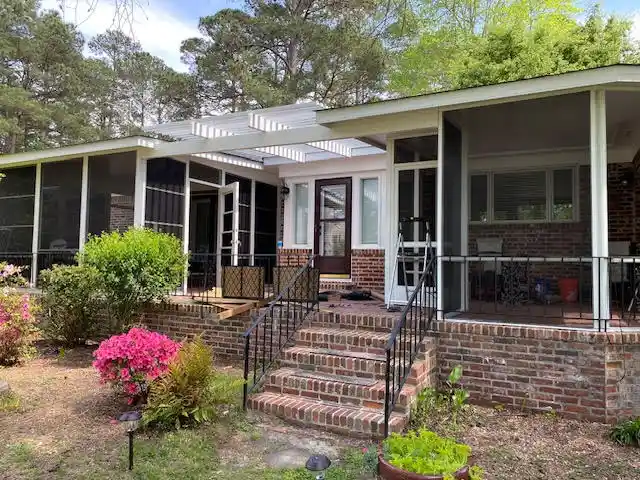
- Year-round sunroom additions. A fully enclosed, insulated sunroom that is heated and cooled and opens into the home. This is the option most people mean when they want true living space in every season, and it is often planned as a home extension.
- Screened sunrooms and screen rooms. Comfortable, roofed spaces with insect screening that let in fresh air while helping keep bugs outside. If you already have a porch, we also remodel and upgrade screened porches.
- Custom design, windows, doors and finishes. Layouts planned around your home, with window and door selections, flooring and interior finishes, plus structural framing and exterior work that ties the new space back to the house.
If what you really need is a separate dwelling for family, that is a different project. See our Lowcountry ADU services.
Why a Lowcountry sunroom takes planning
The Lowcountry is hard on a room full of glass. Summer heat and humidity, coastal wind and local permit rules all shape how a sunroom should be designed. Getting those decisions right at the start is easier than correcting them later.
Heat and humidity. A screened room will feel like the outdoors, because it is. Furniture and finishes need to tolerate moisture, and pollen still finds its way in. A glassed-in space that is not heated or cooled can be pleasant on more days, but it can also trap heat on a sunny afternoon. A year-round sunroom is built more like the rest of the house, with insulation and conditioned air, so it can work as a family room in every season. Shade, the direction the room faces and operable windows all matter.
Hurricane wind ratings. Any addition along the coast has to be designed for wind. South Carolina enforces the 2021 International Residential Code with state modifications, adopted by the South Carolina Building Codes Council. Under the state’s version of IRC Section R301.2.1, design wind speeds come from the Council’s county wind and seismic maps, and the local building official confirms the figure for your address. Where wind design is required, the code calls for an engineered method. In practice, that affects how the roof ties into your house, how the structure is anchored and which windows and doors are rated for the job. The state has announced that its 2024 building codes take effect January 1, 2027.
Permits. A sunroom addition almost always needs a building permit, because it enlarges or alters the home. Requirements vary by town and county. In Mount Pleasant, the Building Inspection Division states that its codes require a permit to construct, enlarge or alter any building or structure, and that it reviews plans for additions and renovations. The Town’s stormwater and tree preservation permit also lists additions and screened porches as examples of projects that need it. In the Old Village, the Historic District Preservation Commission reviews exterior changes before work can start. A project in Summerville, North Charleston, James Island or unincorporated Charleston, Dorchester or Berkeley County will go through a different building department, so we confirm the jurisdiction first.
If your lot is in a FEMA-mapped flood zone, that should be checked before design begins. You can look up a property on the FEMA Flood Map Service Center. This is general information, not code advice; your local building department has the final word.
Our process: from consultation to walkthrough
1. Consultation. We start by talking through how you want to use the room, looking at your home and discussing options such as a year-round sunroom, a screened room or a home extension. There is no obligation. Request a consultation or call (843) 376-9730.
2. Design. We plan the layout around your home’s structure, the way you will use the space and the look of the existing exterior. That includes the sunroom category under the residential code, which shapes the walls, windows and whether the space counts as living area.
3. Permits. We prepare the construction documents and work through the permit process with the building department that has jurisdiction over your address, including plan review and any related site permits the town or county requires.
4. Build. We manage the construction, from structural framing and exterior finishing to windows, doors and interior finishes, and we keep you informed as the work moves forward.
5. Walkthrough. When the work is complete, we walk the room with you, go over the finished space and address any remaining items before we close out the project.
Areas we serve
Intelligent Home Services is based in Summerville and builds sunroom additions throughout the Charleston area, including:
Summerville, Mount Pleasant, Charleston, North Charleston, Goose Creek, Ladson, James Island, West Ashley and Hanahan.
If you are looking for a sunroom contractor in Summerville, SC or a sunroom addition in Charleston, SC, we would be glad to look at your home and help you compare options.
Frequently asked questions
Do I need a permit for a sunroom addition?
In most cases, yes. Building departments generally require a permit to construct, enlarge or alter a home, and a sunroom addition falls in that category. In Mount Pleasant, the Building Inspection Division reviews plans for additions, and related stormwater or tree permits may also apply. We confirm the requirements for your specific address and jurisdiction.
What is the difference between a sunroom, a screened porch and a glass enclosure?
A screened porch is a roofed outdoor space with insect screening. A glass enclosure uses glass or clear panels, often on an existing porch or patio, and is usually not heated or cooled as part of the house. A sunroom addition is a fully enclosed, insulated room that is heated and cooled and opens into the home. Our Mount Pleasant guide walks through the differences, including how the building code sorts sunrooms into categories.
Is a sunroom considered living space?
Under the South Carolina residential code’s sunroom categories, only a Category V sunroom, which is heated or cooled and open to the main house, is habitable and conditioned. Categories I through IV are nonhabitable. Choosing the category early matters because it affects the design and whether the space counts as living area.
How do coastal wind ratings affect a sunroom?
Homes in the Charleston area are designed to wind speeds shown on the Building Codes Council’s county maps, and the local building official confirms the speed for your lot. That rating influences the roof connection, the anchoring, and the windows and doors used in the sunroom. We design to the requirements that apply to your address.
Can you add a sunroom onto an existing screened porch?
Often, yes, though not every porch is a good candidate. It depends on the existing structure, the foundation, how the roof ties into the house and the codes that apply to the work. We can look at your porch during the consultation and tell you what it would take to enclose or convert it.
Start planning your sunroom addition
If you are ready to add a brighter, more useful room to your home, Intelligent Home Services is here to help. Contact us to schedule a consultation, or call us at (843) 376-9730. We will help you compare options and walk you through design, permits, construction and the final walkthrough.
Sources: South Carolina Building Codes Council (adopted codes; 2024 codes effective January 1, 2027) and its wind/seismic maps; 2021 South Carolina Residential Code (ICC), Sections R301.2.1, R301.2.1.1 and R301.2.1.1.1; Town of Mount Pleasant Building Inspection Division, Building Code and What’s New pages and Historic District Preservation Commission; FEMA Flood Map Service Center. This page is general information, not legal or code advice. Confirm current requirements with your local building department before you build.